
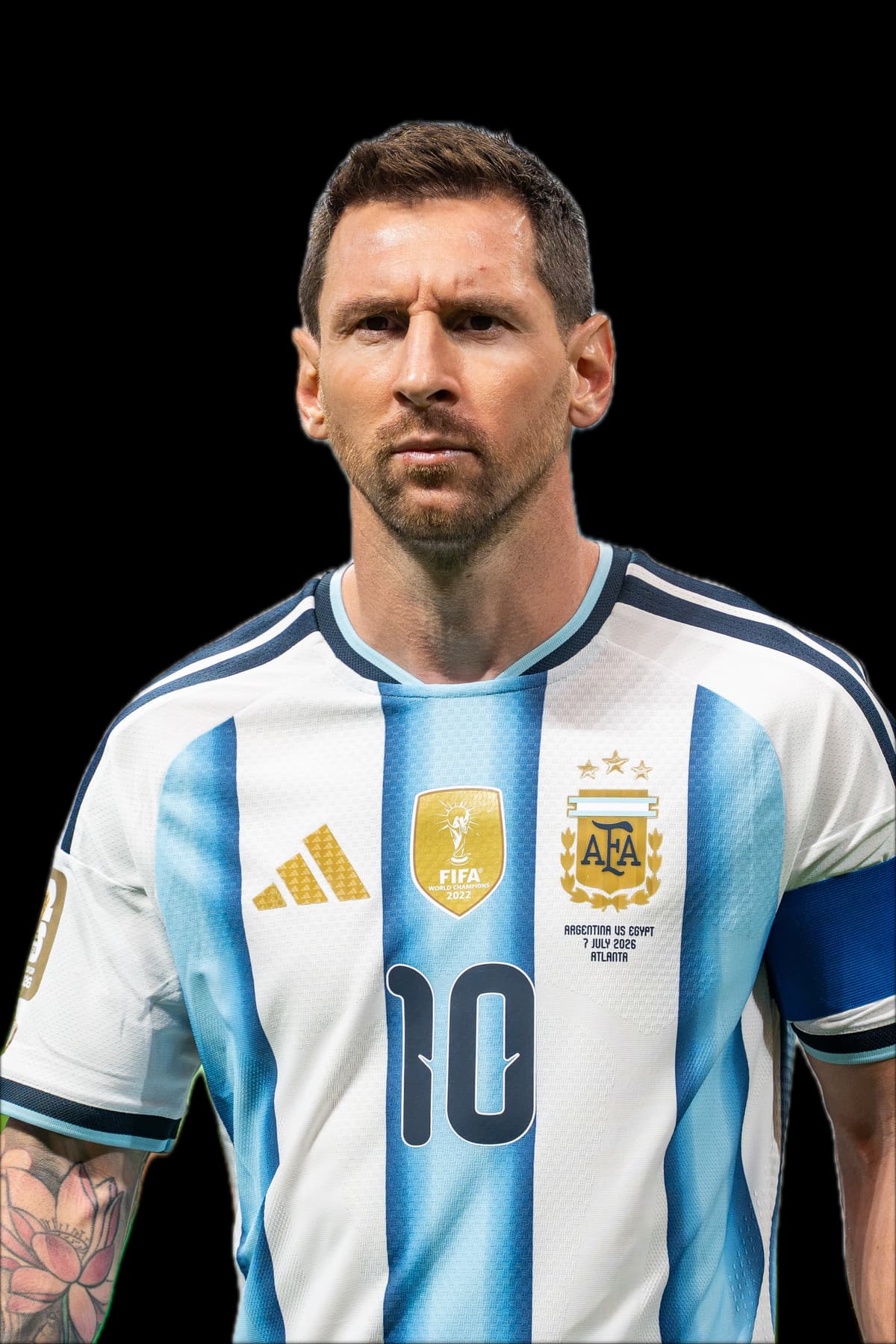
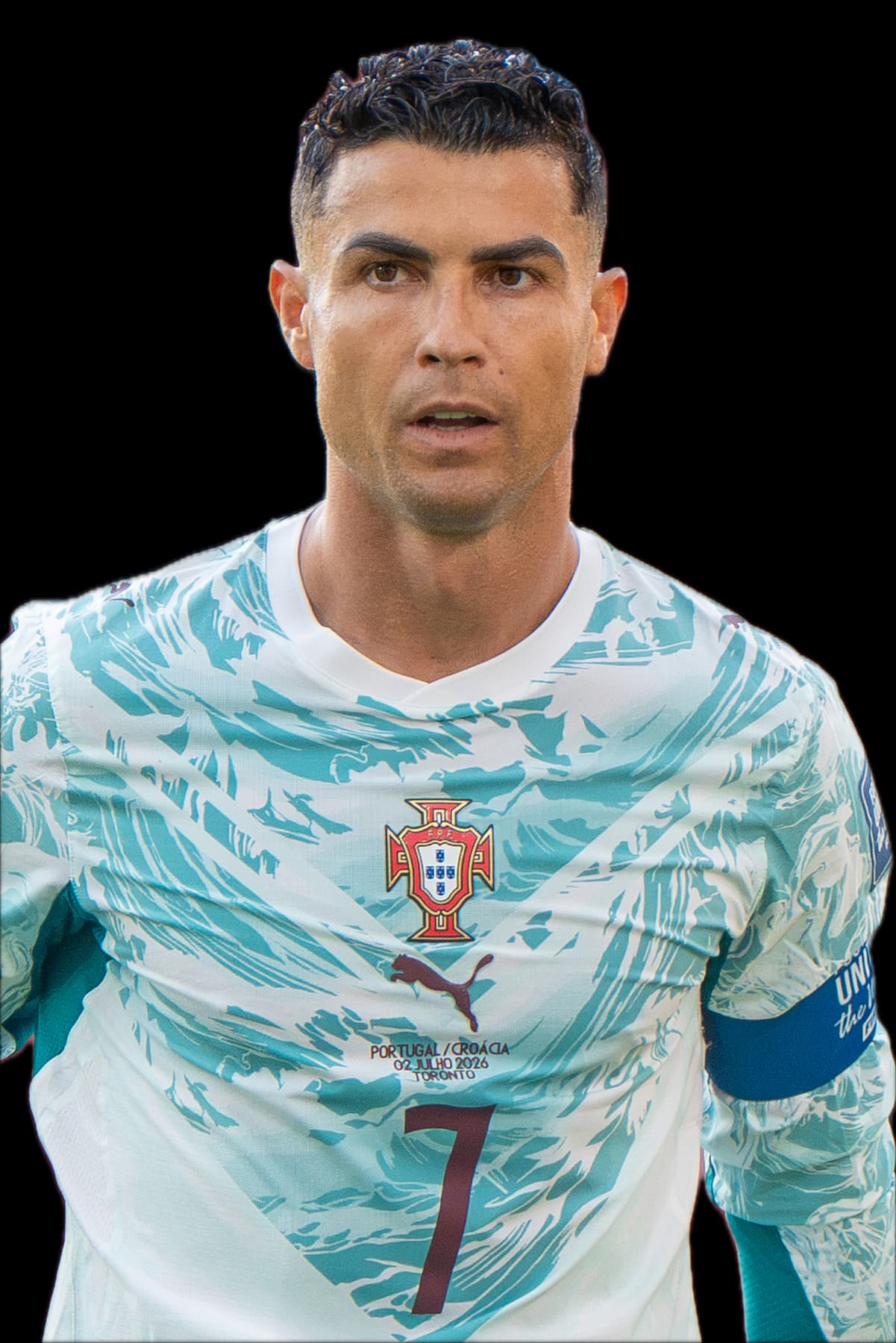
Messi vs Ronaldo: Ballon d’Or of All Time (Fans’ Vote)
Explore the Messi vs Ronaldo Ballon d’Or of All Time fan vote: dated standings, voting rules, deadlines and what the result can and cannot tell you.
Cristiano Ronaldo’s 2008 Ballon d’Or led the latest publicly accessible official B.O.A.T. update reviewed for this article, ahead of Lionel Messi’s 2012 award. That update was published on 20 October; it does not establish a final winner. Official poll update
B.O.A.T. means Ballon d’Or of All Time. Despite the name, the organizer describes it as a public fan poll, without an official trophy. It also explicitly separates the initiative from the Super Ballon d’Or. Organizer’s clarification
To understand the Messi vs Ronaldo contest, keep three questions separate: which award-winning year leads this poll, who has won more annual Ballons d’Or, and which footballer you consider greater. Each question requires different evidence.
What are fans choosing?
The ballot offers individual winning years from players with at least two men’s Ballon d’Or victories. Counting the listed cards gives 32 entries representing 10 players. A vote for Ronaldo 2008 therefore supports a different entry from Ronaldo 2017. Messi’s winning years also appear separately. Official ballot
Alongside Messi and Cristiano Ronaldo, the choices include Alfredo Di Stéfano, Johan Cruyff, Franz Beckenbauer, Kevin Keegan, Karl-Heinz Rummenigge, Michel Platini, Marco van Basten and Ronaldo Nazário. The Brazilian Ronaldo and Cristiano Ronaldo are separate candidates; their identities and award histories are recorded in UEFA’s winners list.
This selection rule limits what the result can establish. It compares the listed award-winning years; it is not an unrestricted ballot covering every footballer or every outstanding season.
Messi’s eight wins and Ronaldo’s five
Their annual award records provide useful context:
Player | Ballon d’Or wins through 2025 | Winning years |
|---|---|---|
Lionel Messi | 8 | 2009, 2010, 2011, 2012, 2015, 2019, 2021, 2023 |
Cristiano Ronaldo | 5 | 2008, 2013, 2014, 2016, 2017 |
These completed-edition records are documented in UEFA’s Ballon d’Or winners history. You can also explore the Messi vs Ronaldo Ballon d’Or timeline.
Eight previous victories do not automatically make Messi the favourite in a new poll. Nor does a lead for Ronaldo’s 2008 entry change the historical award totals. One measures repeated recognition across different editions; the other measures support for a particular choice on this ballot.
Who is leading the fans’ vote?
The organizer’s French-language update identifies its snapshot as 20 October 2026 at 17:00 French time:
Position | Entry | Reported share of votes |
|---|---|---|
1 | Cristiano Ronaldo — 2008 | 75% |
2 | Lionel Messi — 2012 | 9% |
3 | Cristiano Ronaldo — 2017 | 6% |
These figures come from the dated official standings report. They are neither verified live percentages for 22 October nor final results.
The year matters whenever you share the standings. Saying “Ronaldo 2008 received 75% in the published snapshot” is more precise than saying “75% of fans chose Ronaldo.” The latter incorrectly turns a share of submitted votes into a share of individual people.
Likewise, Messi 2012’s percentage is not necessarily the combined percentage for every Messi entry. A complete player-level comparison would require all entries from the same snapshot, with consistent totals. Adding figures taken from different dates would produce an unreliable result.
What paid, repeat voting means for the result
The terms permit repeated participation, with a separate €1 photograph purchase for each vote. Consequently, the vote count does not equal the number of distinct supporters. Official voting terms
Consider a hypothetical example, unrelated to the actual standings. One supporter submits 20 paid votes for Entry A. Ten other supporters each submit one vote for Entry B. Entry A leads 20–10, although more individual people backed Entry B.
That example does not demonstrate manipulation. It shows why the poll’s rules affect the meaning of its percentages. Spending, willingness to participate and coordination can influence the outcome alongside sporting preference. The result cannot establish the views of all football fans worldwide.
How separate years can split support
Here is another hypothetical example, illustrating the ballot structure:
Entry | Example votes |
|---|---|
Messi 2012 | 400 |
Messi 2015 | 350 |
Ronaldo 2008 | 600 |
Ronaldo 2008 leads every individual entry in this example. Yet the two Messi entries together have 750 votes.
Both observations are mathematically correct. They answer different questions: the strongest individual entry and the combined support across a player’s entries. These invented numbers are not evidence about the real distribution.
More available years create more places for votes to go, but that alone does not prove Messi is disadvantaged or explain Ronaldo’s actual lead. Establishing either claim would require evidence about how participants chose and distributed their votes.
How to participate, and when voting closes
The published closing time is 27 October 2026 at 23:59 Paris time. Results are scheduled for 28 October 2026 on the Ballon d’Or website and its social channels. Readers elsewhere should convert the Paris deadline to their own local time. Official voting page and FAQ
Before participating, check the eligibility and purchase conditions. Entrants must be at least 18 and use one account. Each vote requires a €1 digital photograph purchase; separate bank or payment-provider charges may apply. The accompanying ticket prize draw is distinct from the football poll. Winning the draw does not determine which football entry leads. Eligibility, purchase and draw terms
To participate:
Open the official ballot and review the current rules.
Register or sign in, then identify the exact player and year you want.
Follow the displayed purchase and voting prompts, checking the selection before submitting.
Check your account afterward rather than assuming that a payment alone completed the vote.
The account and purchase requirements are set out in the participation terms.
The organizer’s FAQ says that if payment succeeds but voting does not, the paid vote remains on the account. Reload the page and select a player to use it; contact the listed support address if the problem continues. Official payment troubleshooting
This makes the distinction between purchasing and casting a vote practically important. Avoid repeating a payment merely because the page did not appear to finish loading.
How to compare Ronaldo 2008 with Messi 2012
A meaningful choice starts with a criterion. You might value scoring, influence on major victories, creativity, consistency or the memories a particular year produced. Those preferences can lead to different answers without requiring either supporter to ignore the facts.
Ronaldo 2008: scoring alongside major club success
Ronaldo’s 2008 award followed a Manchester United campaign in which he scored 42 club goals in 2007/08, including 31 in the Premier League. United won the Premier League and Champions League. UEFA’s contemporary award report documents that combination of individual production and team success. UEFA’s 2008 Ronaldo report
If your priority is a player’s contribution to a league-and-European-title campaign, that is a clear basis for considering Ronaldo 2008. The argument becomes stronger when you explain how his contribution mattered, rather than treating every team trophy as an individual achievement.
Messi 2012: an exceptional calendar-year scoring total
Messi scored 91 goals during calendar year 2012: 79 for Barcelona and 12 for Argentina. Barcelona’s own retrospective provides that breakdown. FC Barcelona’s 2012 goals record
For a voter prioritizing sustained scoring across January to December, this is a concrete reason to favour Messi 2012. It does not require claiming that goals alone capture his complete contribution or settle every comparison with another player.
Why 91 versus 42 is not a fair direct comparison
Those two famous totals cover different periods and teams:
Figure | Time window | Teams included |
|---|---|---|
Ronaldo’s 42 goals | 2007/08 club season | Manchester United |
Messi’s 91 goals | January–December 2012 | Barcelona and Argentina |
The sources above establish those boundaries. Subtracting the totals would not produce a meaningful measure of the difference between their performances.
For a statistical comparison, first align the period and competition scope. Compare complete club seasons with complete club seasons, or calendar years with calendar years. Then consider appearances or minutes, opposition and playing responsibilities. Equal dates improve comparability but cannot remove every contextual difference.
The site’s 2007/08 club-season comparison, 2012 calendar-year comparison and sources and counting rules let you inspect those boundaries before drawing conclusions.
How B.O.A.T. differs from the annual and Super Ballon d’Or
The annual Ballon d’Or has a defined evaluation period and an international journalist jury. Under the 2026 regulations, the men’s jury includes one representative from each of the top 100 countries in the specified FIFA ranking. The stated criteria prioritize individual performance, followed by collective achievements and fair play. Official 2026 award regulations
The Super Ballon d’Or is a separate historical award, presented to Alfredo Di Stéfano in 1989. In its 22 October clarification, the organizer states that B.O.A.T. has no connection to that award and that no official date has been set for a second Super Ballon d’Or. Official distinction between B.O.A.T. and the Super Ballon d’Or
A headline saying someone has “won the all-time Ballon d’Or” therefore needs context. Check whether it concerns this fan poll, the annual award, the historical Super Ballon d’Or or a different publisher’s survey. Similar wording does not make their rules or significance interchangeable.
Choose a year, then explain your reasoning
If you want to take part, decide which achievement matters most to you before selecting the corresponding year. If you want to evaluate the result, check its source, timestamp, voting rules and whether it reports individual entries or combined player totals.
For the wider Messi vs Ronaldo debate, use the poll as evidence of participating fans’ voting choices. Build your sporting judgment from clearly defined records and the performances behind them. That gives you an argument you can explain even when the leaderboard changes.