
Ballon d’Or Winner 2026: Harry Kane’s Stats, Voting Rules and Historic Win
Harry Kane is the Ballon d’Or winner 2026. Explore his 73-goal season, confirmed rankings, voting rules and latest points-count update.
Harry Kane is the 2026 men’s Ballon d’Or winner, bringing an extraordinary season to a fitting finish. The Bayern Munich and England striker received the award at London’s Palladium Theatre on 26 October, ahead of Kylian Mbappé and Lamine Yamal. At 33, Kane became the first Englishman to claim the honour since Michael Owen in 2001. UEFA’s official announcement
The headline is straightforward. The story behind it deserves a closer look.
Kane produced a season that demands attention even in an era accustomed to remarkable scoring numbers. His case stretched across league football, cup finals, European knockout matches and international competition. There were trophies, individual records and goals delivered under pressure. Together, they made a persuasive argument for football’s most prestigious individual award.
For supporters who have followed his journey from Tottenham to Munich, there was an emotional pull, too. A career already filled with scoring milestones now has a Ballon d’Or alongside them.
The numbers explain how he reached this point:
Measure | Kane’s 2025/26 return |
|---|---|
Goals for club and country | 73 |
Appearances for club and country | 65 |
Goals for Bayern Munich, all competitions | 61 |
Competitive appearances for Bayern | 51 |
Bundesliga goals | 36 |
DFB-Pokal goals | 10 |
Champions League goals | 14 |
Goals for England across the season | 12 |
Goals at the 2026 World Cup | 6 |
England Football confirms the overall total and club-country split, while Bayern’s season review provides the domestic cup and European breakdown. Competition totals in the table are included within the broader figures; they should not be added together. England Football’s season summary, Bayern’s statistical review
One distinction matters immediately: Kane scored 61 goals for Bayern, while 73 represents his combined Bayern and England total. Mixing those figures would exaggerate his club return and obscure the international contribution that strengthened his candidacy.
His Bayern record works out at approximately 1.20 goals per appearance, calculated from 61 goals in 51 competitive matches. That is a goals-per-appearance figure, rather than a rate per 90 minutes, but it still conveys the scale of his consistency. Maintaining that output across an entire campaign requires far more than a few spectacular afternoons. Bayern also confirmed that he collected the Gerd Müller Trophy for the season’s leading goalscorer. Bayern’s Gerd Müller Trophy announcement
In the Bundesliga, Kane’s 36 goals secured a third consecutive scoring title. His contribution helped Bayern retain the championship, giving his individual production a clear team outcome. The league goals provided the foundation of his season; performances in other competitions gave the Ballon d’Or argument greater depth. Bundesliga’s official report
The German Cup final supplied one of the strongest examples. Kane scored all three goals in Bayern’s 3–0 victory over Stuttgart, completing a cup campaign in which he struck ten times. Bayern’s review identifies him as the first player to score three consecutive goals within one half of a DFB-Pokal final.
That performance carries weight beyond the final score. A striker can accumulate impressive totals over months, yet a final asks a different question: can he decide the match when a trophy is immediately at stake? Kane answered it emphatically. Bayern’s account of his cup records
Europe offered another demanding test. Kane scored 14 goals in 13 Champions League appearances as Bayern reached the semi-finals. Mbappé finished ahead of him in that competition’s scoring race with 15, an important detail when assessing the two leading candidates fairly.
Kane’s European campaign also explains why his victory should not be reduced to domestic dominance. His output remained substantial against continental opposition, even though Bayern fell short of the final. Bundesliga’s European scoring breakdown
At the World Cup, Kane scored six goals as England finished third, their best placing since winning the tournament in 1966. Those performances added an international dimension to a candidacy already built on exceptional club form. He remained productive through a summer in which the leading contenders had another major stage on which to influence the debate. Bundesliga’s assessment of Kane’s season
His broader game deserves attention as well. Kane can drop away from the defensive line, receive possession and bring attacking teammates into play. That gives him influence before the final pass or shot. The Bundesliga’s analysis highlights his ability to connect attacks involving players such as Michael Olise and Luis Díaz.
For anyone assessing the Harry Kane Ballon d’Or campaign, that combination matters: a forward’s value includes both the chances he finishes and his contribution to making an attack function. Bundesliga’s analysis of his playing role
Understanding the result also means understanding the rules. According to the award’s official explanation, the Ballon d’Or considers three criteria, in this order of importance:
Individual performance.
Team achievements.
Class and fair play.
That order gives useful context to Kane’s win. His individual season could carry the strongest weight while Bayern’s trophies supported the case. The published framework allows voters to assess exceptional performance alongside collective success, rather than treating any single team trophy as an automatic qualification. Official Ballon d’Or criteria
The assessment period is another detail that often gets lost in the discussion. For the 2026 Ballon d’Or, the official reference window ran from 3 August 2025 to 19 July 2026, including international competitions.
Consequently, early performances in the 2026/27 campaign fell outside this award’s evaluation period. A brilliant September match might have influenced public conversation, but it was outside the published window for judging the 2026 prize. The World Cup, by contrast, formed part of the relevant period. Ballon d’Or’s official timeline explanation
The men’s award uses an international jury of football journalists, with one representative from each of the top 100 countries in the FIFA rankings. Each juror selects ten players from the 30-player shortlist and places them in order. The Premier League’s account of the 2026 process confirms this format. 2026 voting process
The points attached to each position are:
Position on a journalist’s ballot | Points awarded |
|---|---|
First | 15 |
Second | 12 |
Third | 10 |
Fourth | 8 |
Fifth | 7 |
Sixth | 5 |
Seventh | 4 |
Eighth | 3 |
Ninth | 2 |
Tenth | 1 |
The player with the highest combined score wins. If players finish level, first-place selections provide the initial tie-breaker, followed by second-place selections and subsequent positions if required. UEFA’s voting explanation
This system makes the difference between points and votes essential. A journalist submits one ranked ballot that awards points to ten players. A player’s total score therefore cannot be described as the number of journalists who voted for him.
First-place selections tell another part of the story. Broad support across second and third positions can contribute substantially to a candidate’s total, which is why a complete voting breakdown is more informative than a finishing position alone.
Kane’s exact points total and number of first-place votes could not be verified from the official results material reviewed for this article as of 27 October 2026. The confirmed finishing order should therefore be kept separate from any unverified numerical claims.
There is reporting that the contest was exceptionally close. AS attributed comments to France Football editor-in-chief Vincent Garcia indicating that Kane’s winning margin over Mbappé was smaller than the 41-point gap between Rodri and Vinícius Júnior in 2024. That provides reported context about the margin, but it does not establish Kane’s exact score. AS’s report on the close result
The confirmed men’s top ten finished as follows:
Rank | Player |
|---|---|
1 | Harry Kane |
2 | Kylian Mbappé |
3 | Lamine Yamal |
4 | Rodri |
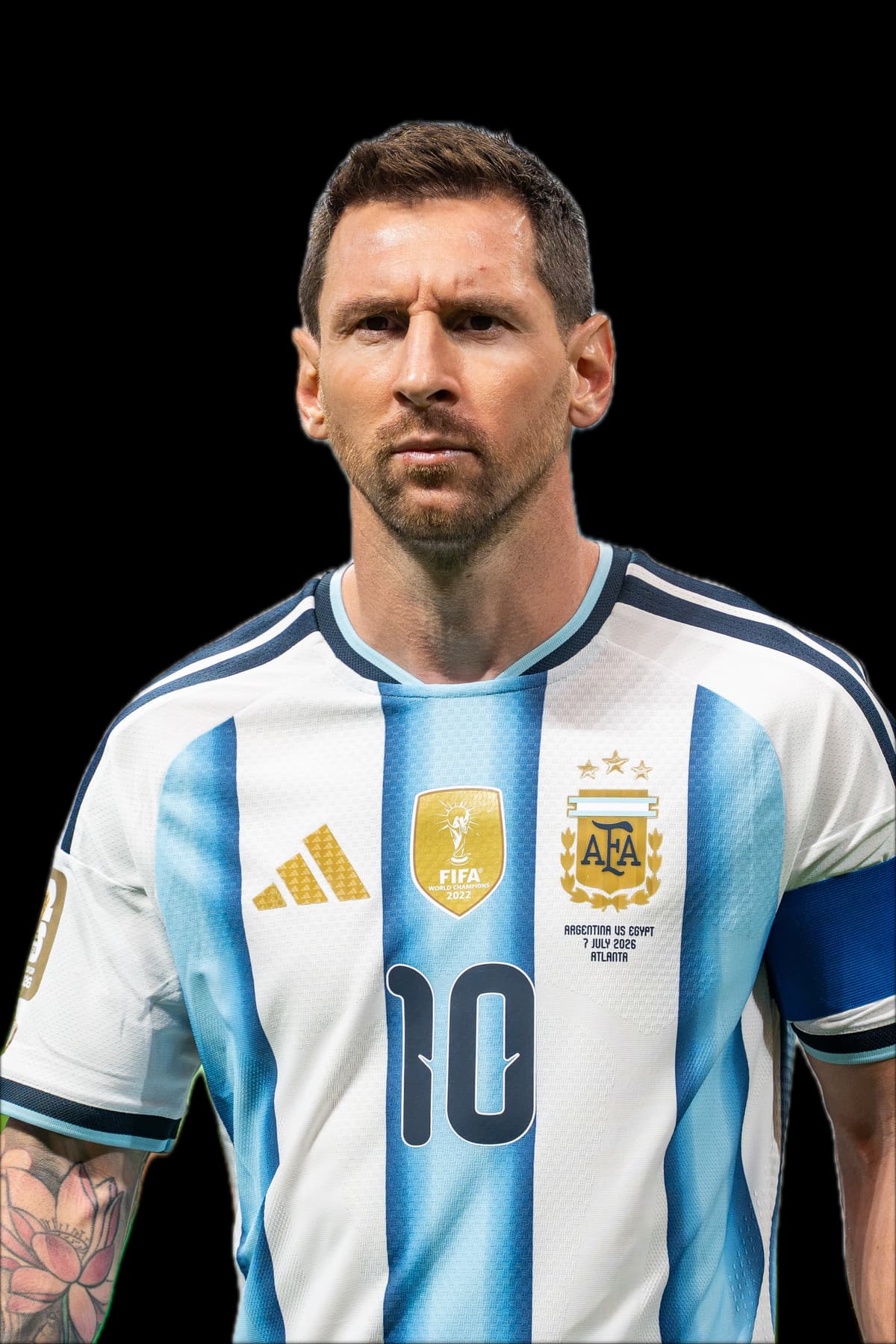
5 | Lionel Messi |
6 | Khvicha Kvaratskhelia |
7 | Ousmane Dembélé |
8 | Erling Haaland |
9 | Michael Olise |
10 | Fabián Ruiz |
These positions are listed in UEFA’s official results. Confirmed 2026 rankings
Comparing the leading candidates shows why the debate was competitive. L’Équipe’s nominee profiles recorded 73 goals and eight assists in 65 matches for Kane across the season. Mbappé’s profile listed 58 goals and 13 assists in 60 matches, while Yamal’s showed 25 goals and 20 assists in 57 appearances.
Those figures describe different contributions. Yamal brought substantial creative output, while Mbappé combined scoring with chance creation. Kane’s advantage was the exceptional scale of his goalscoring. The comparison supports a strong case for him without requiring the achievements of his rivals to be dismissed. L’Équipe’s official nominee profiles
The historical significance extends beyond the season itself. Kane became the fifth different English Ballon d’Or winner, joining Stanley Matthews, Bobby Charlton, Kevin Keegan and Michael Owen. Keegan won twice, making Kane’s victory England’s sixth award overall. England Football’s list of previous winners
For Bayern, the wait had been even longer. Kane was the club’s first recipient since Karl-Heinz Rummenigge in 1981, a gap of 45 years. He also became the first Bundesliga-based winner since Borussia Dortmund’s Matthias Sammer in 1996. Those milestones explain why the celebrations stretched beyond the player himself. Bayern’s announcement
There was room in his acceptance speech for the club where his professional identity took shape. Kane thanked Tottenham Hotspur and acknowledged the coaches and guidance that helped him reach this moment. It was a reminder that the player receiving the trophy in London had been developed over many years, through progress, setbacks and responsibility. Premier League’s account of Kane’s Tottenham tribute
Kane described the campaign as “the best season of my career,” while thanking his family, teammates and coaches. Given the output and the honours, that assessment is easy to understand. Bayern’s report of his reaction
The lasting image will be Kane holding the trophy. The strongest explanation for it remains on the pitch: relentless production, decisive performances and a season sustained across several demanding competitions. His first Ballon d’Or gives that body of work a permanent place in football history.